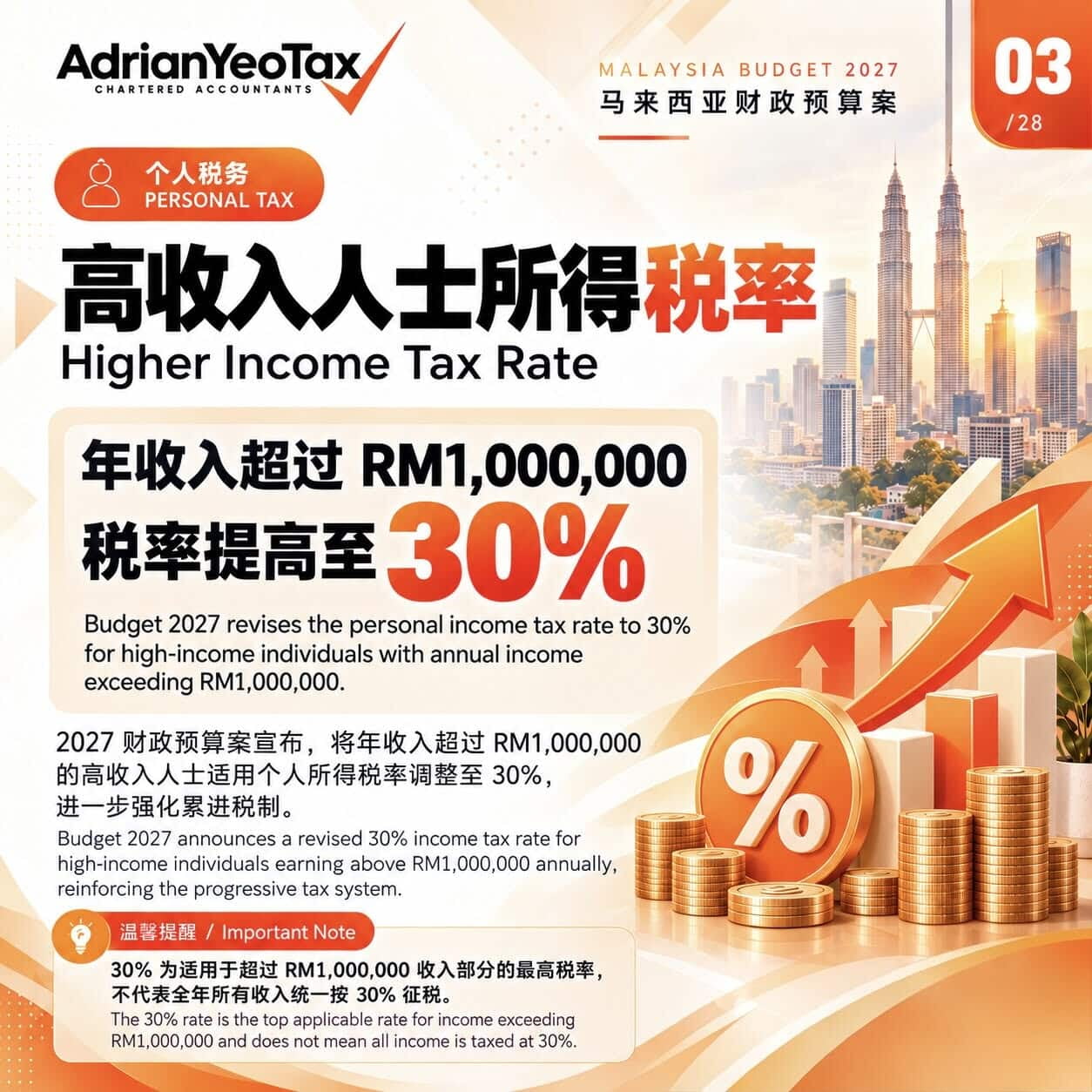
While Budget 2027 brings relief for middle-income earners, it also asks more from those at the top. The 30% personal income tax rate will now apply to income above RM1 million, instead of only above RM2 million.
What changed
From the 2027 year of assessment, the top personal income tax rate of 30% kicks in at a much lower threshold. Previously, a resident individual only reached 30% once income passed RM2 million. Under Budget 2027, the line moves to RM1 million, so more of a high earner’s income falls into the top bracket.
Tax experts noted that this is a deliberate move to strengthen the progressive tax system, and that it may increase the tax load on individuals earning above RM1 million. It also helps to partly offset the cost of the relief and rate cuts given to middle-income earners.
What 30% does and does not mean
This is the point most often misunderstood. The 30% rate is the top marginal rate. It applies only to the portion of chargeable income above RM1 million. It does not mean all of your income is taxed at 30%.
Suppose your chargeable income is RM1.2 million. The first RM1 million is taxed according to the existing progressive bands. Only the last RM200,000 is taxed at 30%. Your effective tax rate, meaning total tax divided by total income, will always be lower than 30%.
Who is affected?
The change targets high-income individuals. This includes senior executives, professionals, business owners drawing large remuneration or dividends, and individuals with substantial investment or rental income. If your chargeable income stays comfortably below RM1 million, this measure does not change your tax rate.
Planning considerations for high earners
If you are close to or above the threshold, the structure of your income matters more than before. A few areas worth reviewing:
- Income timing and structure. How and when income is received can affect which bracket it falls into.
- Remuneration versus other income. For business owners, the mix of salary, bonus, dividends and retained profits may need a fresh look.
- Full use of reliefs and deductions. Every legitimate relief reduces chargeable income, so it is taxed at your highest rate.
- Long-term planning. Wealth structuring and succession decisions are best made early, with the new rate in mind.
All planning should stay within the law and be based on real commercial and personal circumstances. Done properly, it is about making sure you pay what is due, and no more.
Stay updated
Budget measures become final only after the Finance Bill is passed and LHDN issues its guidelines. We will keep you informed as the details are confirmed.
Speak to AdrianYeo Tax
For high-net-worth individuals and business owners, the right time to review your tax position is before the year of assessment begins. Our chartered accountants can help you understand the impact of Budget 2027 and plan with confidence.
This article is for general information only and does not constitute tax advice. Measures are based on Budget 2027 announcements and may change when the legislation is finalised. Please consult a tax professional about your specific circumstances.