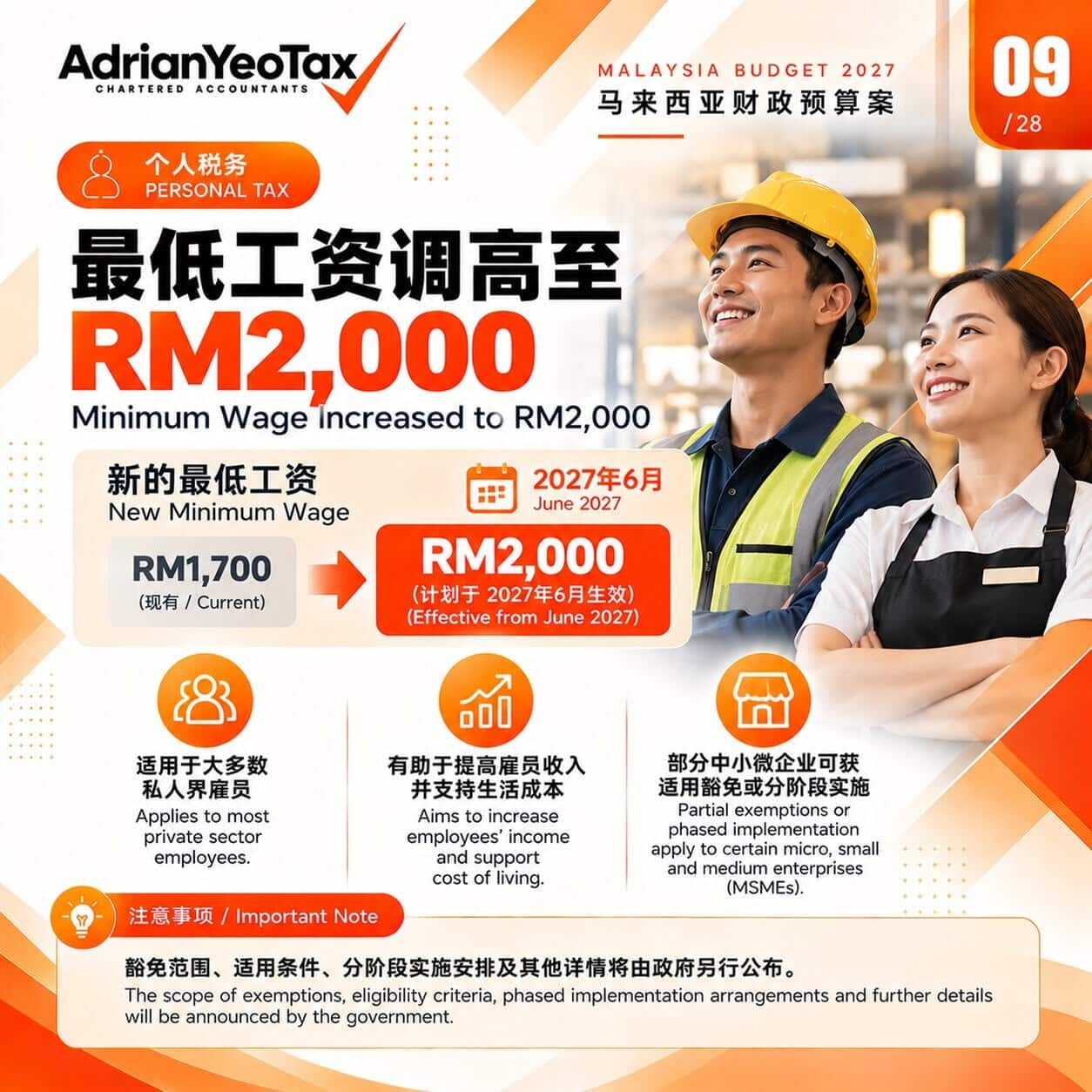
Budget 2027 includes a measure that touches payroll across the country. The national minimum wage will rise from RM1,700 to RM2,000 a month, effective June 2027. The government says it will benefit more than four million workers.
What changed
- New rate: RM2,000 per month, up from RM1,700. That is an increase of RM300, or about 17.6%.
- Start date: June 2027. Employers have until then to prepare.
- Who is covered: most private sector employees covered by the minimum wage order.
The RM1,700 rate remains the legal minimum until the new minimum wage order takes effect.
A temporary exemption for MSMEs
Not every employer has to pay RM2,000 from June 2027. Micro, small and medium enterprises (MSMEs) with annual sales revenue below RM50 million are temporarily exempted from the new rate. The government has said the exemption is meant to give smaller businesses time to adjust their operating models.
This creates a practical point for both sides. An employee of an exempt MSME would continue to be covered by the RM1,700 minimum, while an employee of a larger company would be covered by RM2,000. The duration of the exemption, and the exact eligibility rules, have not yet been published. Employer bodies have already asked for clear guidelines.
More wage reforms on the horizon
The budget also announced a planned minimum wage of RM2,500 for semi-skilled workers and graduates, as a first step towards reforming the wage framework. No implementation date has been given.
What it means for employers
A higher minimum wage affects more than the employees currently earning RM1,700.
- Direct payroll costs. Employees below RM2,000 will need to be adjusted, unless your business is exempt.
- Statutory contributions. EPF, SOCSO and EIS contributions are calculated on wages, so they will rise with them.
- Wage compression. Staff earning slightly above RM2,000 may expect adjustments to maintain pay differences.
- Cash flow and pricing. Budget for the higher cost from June 2027, and consider how it fits with your pricing and staffing plans.
- Tax treatment. Salaries are generally deductible business expenses, so part of the cost is offset through lower taxable profit. Profitable companies and MSMEs benefiting from the lower rates announced in Budget 2027 should factor this into their projections.
What it means for employees
A higher wage floor means more income, though the benefit depends on whether your employer is covered. The tax impact for minimum wage earners is generally small. Combined with the higher individual relief of RM12,000 and other reliefs, many employees at this income level are likely to pay little or no income tax. Individual circumstances vary, so check your own position.
What employers should do now
- Review your payroll. Identify who earns below RM2,000 today, and who sits just above.
- Check your eligibility. Work out whether your annual sales are below RM50 million, and keep records ready, because eligibility criteria are still to be confirmed.
- Model the cost. Include EPF, SOCSO and EIS, and plan cash flow for June 2027 onwards.
- Watch for the new minimum wage order. The official order will confirm the rate, the effective date, exemption rules and the transition period.
- Communicate early. Let your team know what is changing and when.
Speak to AdrianYeo Tax
Payroll changes, tax planning and cash flow are connected. Our chartered accountants can help you assess the impact of Budget 2027 on your business and plan ahead.
This article is for general information only and does not constitute tax advice. Measures are based on Budget 2027 announcements and may change when the legislation is finalised. Please consult a tax professional about your specific circumstances.