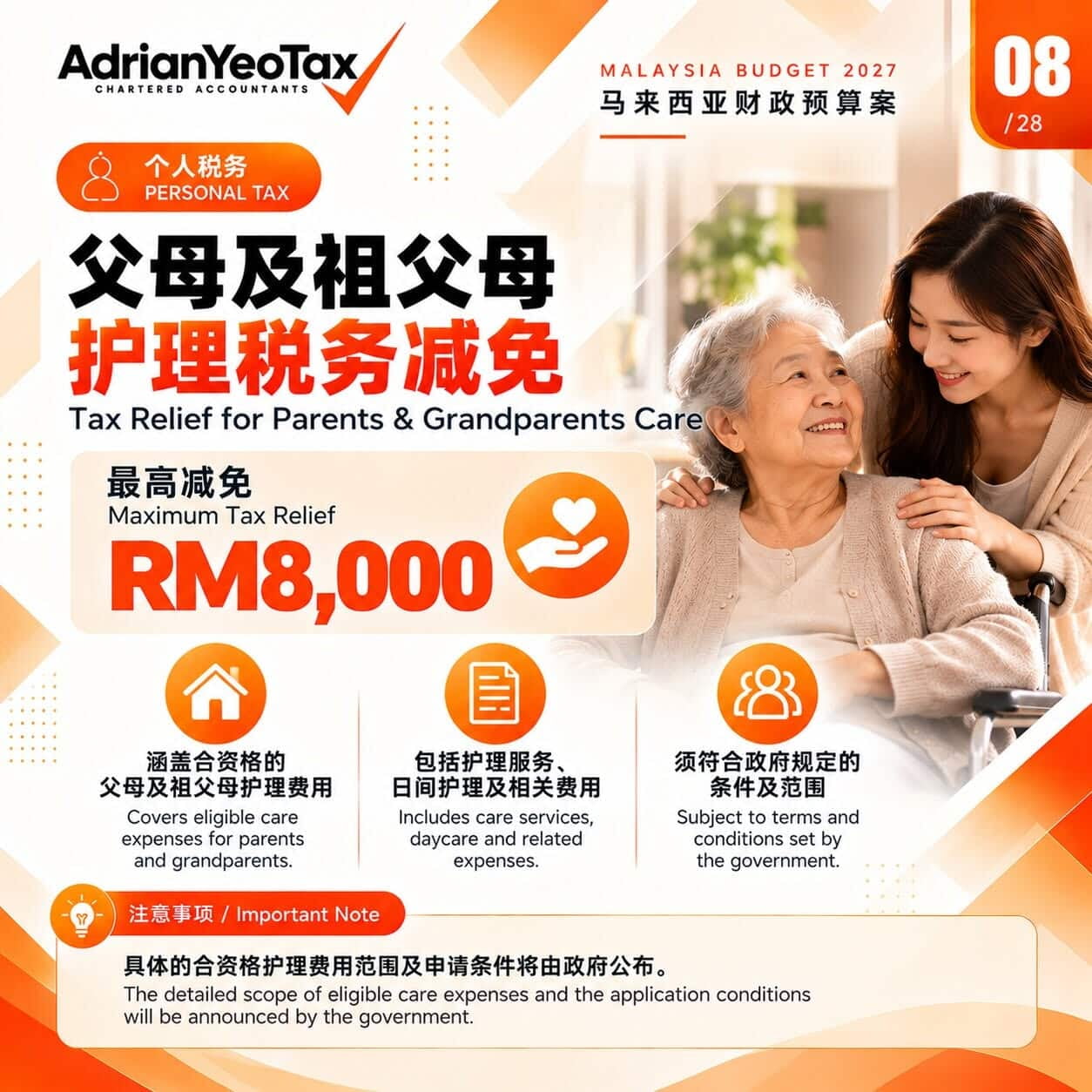
Many Malaysians are part of the “sandwich generation”, raising children while also caring for ageing parents and grandparents. Budget 2027 recognises this by widening the tax relief for parental care, so that the everyday cost of caring for older family members can count, not just their medical bills.
What changed
Taxpayers can currently claim up to RM8,000 a year for expenses relating to their parents and grandparents. Until now, this was limited to specified medical-related costs, such as medical treatment, dental care, full medical examinations, vaccinations and care services.
Under Budget 2027, the relief is extended to all types of care, including:
- care provided at home
- care at day-care centres
- care at residential care facilities
The overall limit of RM8,000 stays the same. The difference is in what you can claim within it.
Simpler documentation
Two proposed changes should make claiming easier:
- No medical practitioner’s verification needed. Previously, a registered medical practitioner had to certify the parent’s or grandparent’s medical condition. This requirement is proposed to be removed.
- A carer declaration instead. You would need a written declaration from the carer, or a copy of the carer’s work permit. The carer cannot be the taxpayer, the taxpayer’s spouse or the taxpayer’s children.
These documentation points are based on the published proposals and may be refined in the final guidelines.
Who benefits most?
- Families who employ a domestic helper or professional caregiver for an elderly parent.
- Families who pay for a day-care centre for seniors.
- Families whose parents or grandparents live in a care home.
- Anyone supporting elderly relatives whose needs are not strictly medical.
How much could it save?
Relief reduces your chargeable income, not your tax directly. As an illustration, not an official figure: if you claim the full RM8,000 and your top bracket is 18%, the tax saving is about RM1,440 (RM8,000 × 18%). Because the change is a widening of what qualifies, not an increase in the cap, you benefit most if you previously spent on non-medical care that could not be claimed.
Conditions still to come
Both the slide’s cautions and the published proposals point the same way: the exact scope and conditions will be confirmed by the government. Points to watch include which care facilities must be registered, how “care” is defined, and who qualifies as a parent or grandparent for this purpose. The measures are expected to apply from the 2027 year of assessment, to be confirmed once the legislation and LHDN guidelines are published.
What to do now
- Keep every invoice and payment record. This includes care service fees, day-care or residential care fees and related costs.
- Prepare the carer declaration. If you employ a carer, ask for a written declaration, or keep a copy of their work permit.
- Check the facility’s registration. Where you use a day-care or residential care centre, confirm it is properly registered.
- Wait for LHDN guidance before you finalise your YA 2027 claim.
Speak to AdrianYeo Tax
Caring for family is a responsibility worth planning for, and the tax system now recognises more of it. Our chartered accountants can help you review your family’s expenses, work out what you can claim and keep your records in order.
This article is for general information only and does not constitute tax advice. Measures are based on Budget 2027 announcements and may change when the legislation is finalised. Please consult a tax professional about your specific circumstances.